SIRE 2.0 Readiness: A Practical Guide to Always Being Charter-Ready
SIRE 2.0 readiness means aligning three things at once: your vessel's management system and documentation, its physical hardware, and — the piece most operators still underweight — your crew's on-the-job competency and interview confidence. Under OCIMF's Core Vessel Inspection Questionnaire (CVIQ), a SIRE 2.0 inspection blends fixed core questions with vessel-specific and rotational questions plus a dedicated human-element assessment, and Navguide Solutions' own analysis of 100,000+ inspection observations across 300+ operators found that 37% of negative SIRE 2.0 observations are human-factor-related, not equipment failures.
See how Guide2Inspections builds SIRE 2.0 readiness into daily routine.
A 30-minute walkthrough with a master mariner — your trades, your inspection regimes, your questions.
What Actually Changed: SIRE vs SIRE 2.0
OCIMF's Ship Inspection Report (SIRE) programme has run since 1993 on a fixed question set — VIQ7 in its most recent legacy form. SIRE 2.0 is a risk-based redesign of that programme, not a cosmetic update. The table below summarizes the practical differences a DPA or superintendent needs to plan around.
| Area | SIRE 1.0 (VIQ7) | SIRE 2.0 (CVIQ) |
|---|---|---|
| Question set | Fixed VIQ7 checklist — same questions every inspection | Core Vessel Inspection Questionnaire (CVIQ) plus vessel-specific and rotational questions — the mix changes inspection to inspection |
| Human element | Assessed indirectly, largely through equipment and paperwork findings | A dedicated Human Element question set built into the core inspection |
| Inspector consistency | Variable, inspector-dependent | OCIMF inspector calibration and a structured, risk-based scoring model |
| Reporting | Point-in-time, static report | Digital reporting with historical observation trending across inspections |
| Readiness model | Prepare ahead of a known inspection window | Continuous readiness — the vessel is expected to be inspection-ready at all times, not just prepped for a visit |
The last row is the one that changes daily operations the most. Under legacy SIRE, "getting ready" was a project you ran before the inspector arrived. Under SIRE 2.0, readiness is meant to be the vessel's default state — which is exactly the shift Guide2Inspections was built around: a self-inspection regime the crew runs continuously, not a scramble two weeks before a vetting.
The Real Reason Vessels Get Flagged: The Human Factor
Most preparation effort still goes toward hardware and paperwork. The data says that's not where the risk actually sits. 37% of SIRE 2.0 negative observations are human-factor-related — a figure drawn from Navguide Solutions' own analysis of 100,000+ inspection observations across 300+ vessel operators, built up over 48 months of research into HSEQ, training and vetting outcomes. The same underlying pattern shows up on the regulatory side too: Port State Control inspections carry a 0% detention rate, and human-factor gaps are a recurring thread there as well — see our Port State Control preparation guide for that breakdown.
What CVIQ's Human Element Questions Test
SIRE 2.0's human-element questions are not asking whether a piece of equipment works. They are asking whether the people operating it understand the risk, follow procedure under normal workload, and can explain what they did and why. Navguide's own SIRE 2.0 readiness framework groups this into nine specific factors, covered in full below.
Inside a SIRE 2.0 Inspection: Core, Vessel-Specific and Rotational Questions
A SIRE 2.0 inspection draws from three layers of the CVIQ question bank:
- Core questions — the fixed baseline every vessel of that type answers.
- Vessel-specific questions — selected based on the vessel's type, age, trading pattern and inspection history.
- Rotational questions — sampled so the same questions don't repeat identically every time, which discourages "teaching to the test" and rewards vessels that are genuinely inspection-ready rather than coached for one specific checklist.
Duration varies by vessel type, size and inspector — SIRE 2.0 inspections generally run in a similar window to legacy SIRE inspections, commonly one to two full days for larger tankers, but the exact schedule is set by OCIMF and the assigned inspector on a vessel-by-vessel basis. Not independently verified against a published OCIMF duration figure — treat as general orientation, not a locked stat.
Talk to us about your fleet's SIRE 2.0 timeline.
A 30-minute walkthrough with a master mariner — your trades, your inspection regimes, your questions.
The Nine Performance Influencing Factors Inspectors Are Watching For
Human-element findings rarely come from a single dramatic failure. They come from nine recurring, quietly compounding factors — set out by Capt. Robert Shane Vaz, Chief Operating Officer, Navguide Solutions, in SIRE 2.0: The Navguide Playbook: "Human performance is the backbone of a vessel's safety, security, and environmental responsibility... these nine PIFs help the maritime industry systematically understand the factors affecting human performance."
Recognition of Safety Criticality
Do seafarers actually understand the risk and consequence behind a task, not just the step itself?
Custom and Practice
Are safe-operation procedures actually followed, or has "we used to do it like this on my last vessel" quietly replaced them? Procedures that are technically on board but too complex or not in the crew's working language carry the same risk.
Team Dynamics
Is the shipboard team communicating and coordinating well, with everyone given a genuine voice?
Stress, Workload, and Fatigue
Are heads of department actively managing workload and rest, or assuming the crew will cope?
Morale, Motivation, and Nervousness
Low productivity, lack of initiative and procrastination are morale problems long before they're inspection findings.
Workplace Ergonomics
Signage, layout, noise, lighting and equipment placement that make the safe way also the easy way.
Human-Machine Interface
Controls and alarms positioned so crew engage with them rather than route around them (a badly located alarm reset, for example, teaches crew to inhibit alarms instead of checking them).
Opportunities to Learn or Practice
Is the vessel a genuine learning environment — a Master calling the chief officer to the bridge during a difficult manoeuvre to teach, not just to execute?
Not Identified
Some performance gaps can't be confidently attributed to a single factor yet; the framework leaves room to flag those for further investigation rather than force a fit.
As Capt. Vaz puts it: "The ship's crew are the heartbeats that propel the vessel."
Bridge & Deck Readiness: What Gets Missed
Commonly Missed Items on a SIRE 2.0 Inspection
Drawn from Navguide's own case-study work on bridge-preparation handovers, these are the items that recur across inspections regardless of vessel type:
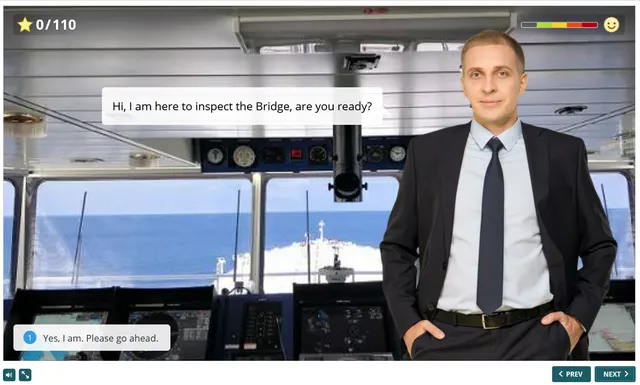
Incomplete Master-Pilot information exchange — bollard pull, mooring configuration, tug name and position not fully communicated or logged.
AIS status/power not reduced where required.
VHF left on, or volume set too low to be functionally useful.
Bell Book missing landmark entries during coastal or restricted-water passages.
ECDIS safety settings not adjusted for restricted waters.
The reframe Navguide uses with junior officers during self-inspection training: "The vetting inspector is not here to find faults or highlight personal weaknesses. They are here to identify gaps or issues with the system."
Case in Point: The Echo Sounder
The echo sounder is one of the most consistently overlooked pieces of bridge equipment — and it maps directly to a known PSC deficiency code, 10118: speed and distance indicator. Recurring findings Navguide has documented include:
Alarm inhibited rather than acknowledged and checked.
Incorrect range scale left set while alongside.
No on/off log entry maintained.
No record of contour-crossing tests.
No SMS instruction defining when the unit should be switched on.
None of these are equipment failures. Every one of them is a documentation or habit gap — exactly the kind of finding the Nine PIFs framework above predicts, and exactly the kind of finding a continuous self-inspection routine catches before an inspector does.
Crew Interview Readiness
CVIQ's human-element questions are frequently delivered as short interviews with individual crew — a format many seafarers have never rehearsed. Guide2Inspections includes scenario-based, gamified evaluation modules that simulate SIRE 2.0, RightShip and PSC personal-interview scenarios, so crew practise explaining a procedure in their own words before an inspector ever asks. The same simulation-game library sits behind Navguide's Maritime LMS, where it's covered in full alongside the rest of Navguide's training content.
See the crew interview-readiness flow inside Guide2Inspections.
A 30-minute walkthrough with a master mariner — your trades, your inspection regimes, your questions.
How Guide2Inspections Builds SIRE 2.0 Readiness Into the Ship
Guide2Inspections is Navguide's inspection-readiness app, and its SIRE 2.0 coverage is organized around three connected modules.
Observations Module
Crew log zone-based observations as they self-inspect, mirroring the way a vetting inspector actually moves through the ship — rather than working down a flat, undifferentiated checklist. Logged observations feed structured, audit-ready reports instead of scattered notes.
Photo Repository
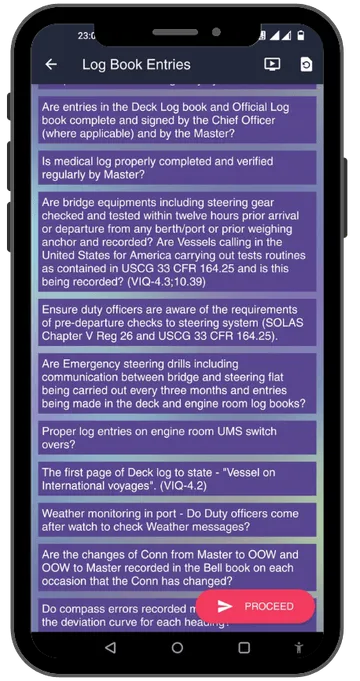
Every checklist item can carry photo evidence, building a maintained visual record of the vessel's actual condition rather than a paper trail of ticked boxes. Guidance content — including the reference photos crew are shown — is fully customizable at the fleet or vessel level.
PIQ Support
The app's documentation coverage is built by mapping Navguide's own question database against the current CVIQ framework, including OCIMF's own pre-inspection documentation requirements (such as keeping the Harmonised Vessel Particulars Questionnaire accurately completed and current in OCIMF's SIRE database) — so PIQ-related gaps surface during routine self-inspection, not the week before a vetting.
"The essence of SIRE 2.0 is that you do not prepare the vessel for an inspection anymore. You are always prepared, always charter-ready."
Capt. Sam Megwa, former OCIMF/SIRE 2.0 Director
That line is the clearest one-sentence summary of what SIRE 2.0 actually asks of a vessel — and it's the philosophy Navguide's self-inspection regime is built to operationalize: continuous, low-friction readiness rather than a pre-inspection scramble.
SIRE 2.0 Readiness Checklist
A working summary of everything above — usable as a standing reference, not a one-time exercise.
Documentation
Hardware
Crew
Frequently Asked Questions
What is the difference between SIRE and SIRE 2.0?
SIRE 1.0 (built on the VIQ7 questionnaire) uses a fixed question set applied the same way at every inspection. SIRE 2.0 replaces that with the Core Vessel Inspection Questionnaire (CVIQ) — core, vessel-specific and rotational questions plus a dedicated human-element assessment — and shifts the underlying model from point-in-time preparation to continuous readiness.
What is CVIQ in SIRE 2.0?
CVIQ, the Core Vessel Inspection Questionnaire, is the question framework at the centre of SIRE 2.0. It combines a mandatory core question set with vessel-specific and rotational questions, so the exact question mix varies from inspection to inspection rather than following one static checklist.
How long does a SIRE 2.0 inspection take?
It depends on vessel type, size and the assigned inspector. SIRE 2.0 inspections generally run in a similar window to legacy SIRE inspections — commonly one to two full days for larger tankers — but OCIMF and the inspector set the exact schedule per vessel. (General guidance, not independently verified against a published OCIMF duration figure.)
What percentage of SIRE 2.0 observations are human-factor related?
37% of negative SIRE 2.0 observations are human-factor-related, based on Navguide Solutions' analysis of 100,000+ inspection observations across 300+ vessel operators.
Is SIRE 1.0 being phased out?
OCIMF has been progressively transitioning the SIRE programme to SIRE 2.0 since its launch, with rollout timing varying by tanker segment. Check OCIMF's own published programme schedule for the current status applicable to your vessel type. (General guidance — Navguide does not publish or control OCIMF's rollout timeline; not independently verified to a specific date.)
Build SIRE 2.0 readiness into your fleet's daily routine.
A 30-minute walkthrough with a master mariner — your trades, your inspection regimes, your questions.