Port State Control Preparation: The Readiness Guide for PSC Inspections
Port State Control preparation means keeping a vessel's certificates, safety equipment, machinery, and crew competency continuously audit-ready — not scrambling in the 48 hours before a port call. Globally, roughly 3.43% of Port State Control inspections end in a detention, and the difference between a clean inspection and a detained vessel usually comes down to the same eight areas, checked the same way, every time.
A good ship should always be ready for a PSC inspection. Twenty-five years at sea taught me that readiness is rarely about knowledge gaps — the crew almost always knows the rule. It is about the gap between what the SMS manual says and what the Port State Control Officer (PSCO) actually finds when he opens a panel, tests an alarm, or asks a third engineer to explain a procedure in his own words. This guide walks through what PSCOs are trained to look for, the eight physical and documentary areas where detentions concentrate, and a checklist your vessel can run before every port call — not just the ones you know are coming.
What Port State Control inspectors are actually looking for
Port State Control exists as the safety net behind flag-state and classification-society oversight: national maritime authorities — under regional frameworks like the Paris MoU, Tokyo MoU, and the US Coast Guard, plus national regimes like Australia's AMSA — board foreign-flagged vessels calling at their ports to verify the ship, its equipment, and its crew genuinely meet the international conventions (SOLAS, MARPOL, MLC, STCW) the vessel's paperwork says it does.
A PSCO's job is not to catch a vessel out. It is to confirm that what's written matches what's real. That distinction matters, because it means preparation isn't about hiding problems before an inspection — it's about closing the gap between the SMS on paper and the ship in practice, permanently, so there's nothing to hide. That is the same principle that shapes SIRE 2.0's move toward continuous readiness rather than pre-inspection cramming, and it applies just as directly here.
A typical PSC inspection begins with a document and certificate review, then moves to a physical walk-through guided by what the inspector saw (or didn't see) in the paperwork, observed vessel history (previous deficiencies, detentions, age, flag performance), and any targeted campaign in effect at that port. Crew members are asked to demonstrate — not just describe — procedures: operate the emergency fire pump, explain the muster list, show the oil record book entries, or walk through a drill they've supposedly practiced.
The 3.43% detention rate — and what it means for your vessel
That number should be read two ways. First, as reassurance: the overwhelming majority of inspections do not end in detention, and most vessels that prepare properly pass without major incident. Second, as a warning against complacency: a detention is rare enough that most crews have never been through one, which means the muscle memory for handling an inspection well often isn't there when it's needed most. Readiness is a discipline built over dozens of ordinary port calls, not a skill you can improvise the first time it's tested for real.
A detention is expensive in ways that rarely show up on the deficiency report itself — lost hire, missed laycan windows, charterer confidence, and the administrative cost of a follow-up inspection all compound the direct cost of the delay. The goal of PSC preparation is not to "pass an inspection." It's to run a vessel where a PSC boarding is a formality because the ship is already in the state the inspector expects to find it.
The 8 areas PSCOs examine (and where your crew should start)
PSC deficiency data consistently clusters around the same physical zones of the vessel, which is exactly how Guide2Inspections divides the ship for training and self-audit — zone by zone, the way an inspector actually walks the vessel, not the way a checklist document is organized on paper. Each area below links through to the matching Guide2Inspections zone on the app page, where crews can run guided self-audits between port calls.
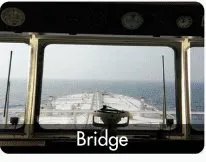 Bridge zone
1. Bridge & navigation equipment
Certificates, chart correction status, ECDIS/radar operability, GMDSS/radio watch, passage planning records, and whether the officer of the watch can demonstrate — not just describe — the emergency steering changeover.
Maps to the Guide2Inspections Bridge zone Engine Room zone
2. Engine room & propulsion machinery
Main engine and auxiliary machinery condition, emergency generator start-up, bilge alarm and oily-water separator function, machinery space fire dampers, and engine room log accuracy against actual running hours.
Maps to the Guide2Inspections Engine Room zone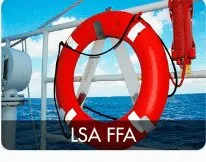 LSA/FFA zone
3. Fire safety & life-saving appliances (LSA/FFA)
Fire pump and fire main pressure, extinguisher service dates, lifeboat and davit operability, immersion suits, EPIRB/SART battery expiry, and whether the crew can run an abandon-ship drill on request, not just on schedule.
Maps to the Guide2Inspections LSA/FFA zone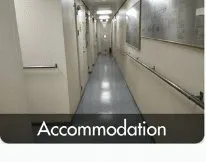 Accommodation zone
4. Accommodation & working/living conditions (MLC)
Crew accommodation standards, mess and galley hygiene, rest-hour records (a frequent MLC deficiency source), and whether crew wages and repatriation documentation are in order.
Maps to the Guide2Inspections Accommodation zone Pump Room zone
5. Pump room, cargo systems & pollution prevention (MARPOL)
Cargo system integrity, gas detection equipment, oil record book entries versus actual transfers, sludge and bilge water management, and pump room ventilation and gas-free certification.
Maps to the Guide2Inspections Pump Room zone Forecastle zone
6. Forecastle, mooring & anchoring equipment
Anchor windlass condition, mooring line and winch maintenance, forecastle store housekeeping, and enclosed-space entry permits and gas-testing records for anyone working forward.
Maps to the Guide2Inspections Forecastle zone Upper Deck zone
7. Upper deck & structural/weathertight condition
Hatch cover and weathertight door condition, freeboard marking visibility, deck lighting, and visible corrosion or structural damage — the kind of item a PSCO can spot from the gangway before even boarding.
Maps to the Guide2Inspections Upper Deck zone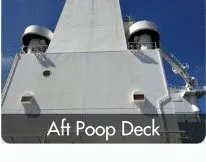 Aft/Poop Deck zone
8. Aft/poop deck, emergency steering & documentation
Emergency steering gear testing, steering flat access and lighting, mooring arrangements aft, and the final documentary cross-check — Safety Management Certificate, Load Line Certificate, and class records — against what the physical inspection actually found.
Maps to the Guide2Inspections Aft/Poop Deck zoneCertificates, documentation and the ISM thread that runs through all eight
Every one of the eight areas above eventually loops back to the same question: does the ship's documentation match what the crew can actually demonstrate? A Safety Management Certificate that says drills are conducted monthly means little if the crew struggles to run one on request. This is the ISM Code's real test, and it's the single most common thread PSCOs pull on across every zone — not a ninth area, but the connective tissue behind the other eight.
AMSA inspections: what's different when you're calling on Australia
The Australian Maritime Safety Authority (AMSA) runs one of the most rigorous Port State Control regimes in the world, and a vessel calling on Australian shores should not treat it as a generic PSC boarding. Navguide built a dedicated, interactive Guide to AMSA Inspections for Tankers, developed in partnership with AMSA inspection specialists, structured to walk a crew through the same physical logic an AMSA inspector uses: an overview of the regime, then zone-by-zone detail across the Bridge, MARPOL & MLC, LSA/FFA, and Engine Roomareas, closing with a conclusion and self-audit section. It replaces a conventional static checklist with an interactive tool a vessel's team can actually work through together.
Specific AMSA deficiency-code statistics and AMSA-published detention-rate figures were not confirmed in the sources available for this page — request current AMSA annual report figures from Capt. Basu's team before publishing a standalone AMSA stat.
How Navguide's AMSA guide is structured
The guide opens with an overview of what AMSA inspectors are trained to focus on for merchant tankers, then walks section by section through the same zones that shape the rest of this page — because AMSA's inspection logic and the wider PSC logic described above are the same discipline applied with Australia's specific regulatory emphasis.
The full section-by-section AMSA content sits behind a login-gated interactive tool on the legacy site; migrate the complete content once access is confirmed rather than reconstructing it from the section index alone.
Concentrated Inspection Campaigns (CIC) — the moving target
Port State Control regimes periodically run Concentrated Inspection Campaigns — a defined period (often three months) where inspectors give focused attention to a specific theme, such as fire safety, MARPOL compliance, or crew familiarization with safety procedures, across every inspection they conduct. A vessel that is only "checklist-ready" for its own SMS can still be caught out by a CIC theme it hasn't specifically reviewed. Continuous readiness — the same standard applied every day rather than refreshed before a known inspection — is the only reliable defense against a CIC, because you cannot always predict which theme will be running when your vessel is boarded.
The current/upcoming CIC theme and dates were not confirmed in sources available for this page — insert the live CIC theme from Paris/Tokyo MoU publications before this page goes live, and keep it current via the CMS.
Twenty minutes to see PSC readiness in action.
Watch how Guide2Inspections turns the eight areas above into a self-audit routine your crew runs between port calls, not a scramble before one.
How do ship crews actually prepare for Port State Control inspections to avoid potential detentions or deficiencies?
This question is asked, unanswered, on Quora — Navguide answers it directly here.
Crews avoid PSC detentions and deficiencies by treating readiness as a continuous state, not a pre-arrival task. In practice that means four things, done as routine rather than as a reaction to an expected inspection:
- Run self-audits between port calls, not just before them. The vessels that are consistently clean on PSC boardings are the ones where the crew has already found and corrected the gap themselves, using the same zone-by-zone logic a PSCO uses — bridge, engine room, fire safety and LSA, accommodation, pump room and cargo systems, forecastle, upper deck, and aft/steering — rather than waiting for an inspector to find it first.
- Demonstrate, don't just document. A drill record means little if the crew can't run the drill on request. Preparation means the third engineer can actually start the emergency generator, not just sign the log that says he did.
- Close out deficiencies from the last inspection completely, with evidence, before the next one — repeat deficiencies are one of the fastest routes to a detention and to a vessel being flagged for increased inspection frequency under a risk-based targeting scheme.
- Keep the paper trail and the physical reality in sync at all times — certificates, the Safety Management Certificate, oil record book, rest-hour records, and drill logs should always match what's actually happening on board, because that alignment is what a PSCO is fundamentally there to test.
This is the same principle Navguide builds into Guide2Inspections: convert the eight areas above into short, zone-based guidance videos and structured self-audit checklists your crew runs routinely — so a PSC boarding tests a state the vessel is already in, not one it's trying to reach in a hurry. Book a demo to see how a fleet runs that discipline in practice.
A PSC readiness checklist you can run before every port call
Frequently asked questions
What do PSC inspectors check first on a ship?
PSC inspections typically begin with a document and certificate review — Safety Management Certificate, Load Line, class records — before moving to a physical walk-through shaped by the vessel's inspection history and any active Concentrated Inspection Campaign. From there, inspectors move zone by zone: bridge and navigation, engine room, fire safety and life-saving appliances, and outward from there.
What is the most common port state control detention deficiency?
Detention-triggering deficiencies cluster around fire safety and life-saving equipment, emergency systems (steering gear, emergency generator), and ISM/documentation gaps where the SMS on paper doesn't match what the crew can demonstrate on request.
How often are vessels subject to PSC inspection?
Inspection frequency is risk-based — it depends on the vessel's flag, age, type, company performance history, and prior deficiency/detention record, set by each regional MoU's targeting scheme (Paris MoU, Tokyo MoU) or national authority (USCG, AMSA). A vessel with a clean history and low-risk profile is inspected less often than one with prior detentions or deficiencies.
What happens if a ship fails a PSC inspection?
A failed inspection results in one or more recorded deficiencies. If a deficiency is serious enough to pose a risk to safety, health, or the environment, the PSCO can detain the vessel until it's rectified — meaning the ship cannot sail. Detentions carry direct costs (lost hire, missed laycan) and indirect costs (charterer confidence, follow-up inspection scrutiny, and increased future targeting).
What is a Concentrated Inspection Campaign (CIC)?
A CIC is a defined period — often three months — during which PSC regimes direct focused attention to one theme (for example fire safety or crew familiarization) across every inspection conducted, in addition to the standard inspection scope. Vessels that maintain continuous readiness rather than SMS-only compliance are better placed to handle a CIC theme they haven't specifically anticipated.
How do ship crews prepare for Port State Control inspections to avoid detentions or deficiencies?
See the dedicated answer above — in short: continuous zone-based self-audits, demonstrating (not just documenting) procedures, fully closing out prior deficiencies, and keeping the paper trail in sync with the physical ship at all times.
A region-specific ranked deficiency-category breakdown (e.g. from the latest Paris MoU or AMSA annual report) for "What is the most common port state control detention deficiency?" above was not confirmed in sources available for this page — insert once Capt. Basu's team confirms the current-year figures.
Straight answers, before the inspector steps aboard.
A 30-minute walkthrough with a master mariner — your trades, your vessel types, your inspection history.